
Compartmentation Surveys — Type 2 and Type 4 intrusive inspections with photographic, location-referenced reports
We carry out compartmentation surveys for higher-risk buildings, residential blocks, schools, care homes and commercial premises across Bedfordshire, Hertfordshire and London. Every survey is referenced against the building's fire strategy drawings, recorded with photographic and location-specific evidence, and structured to support the golden thread of information required under the Building Safety Act 2022.
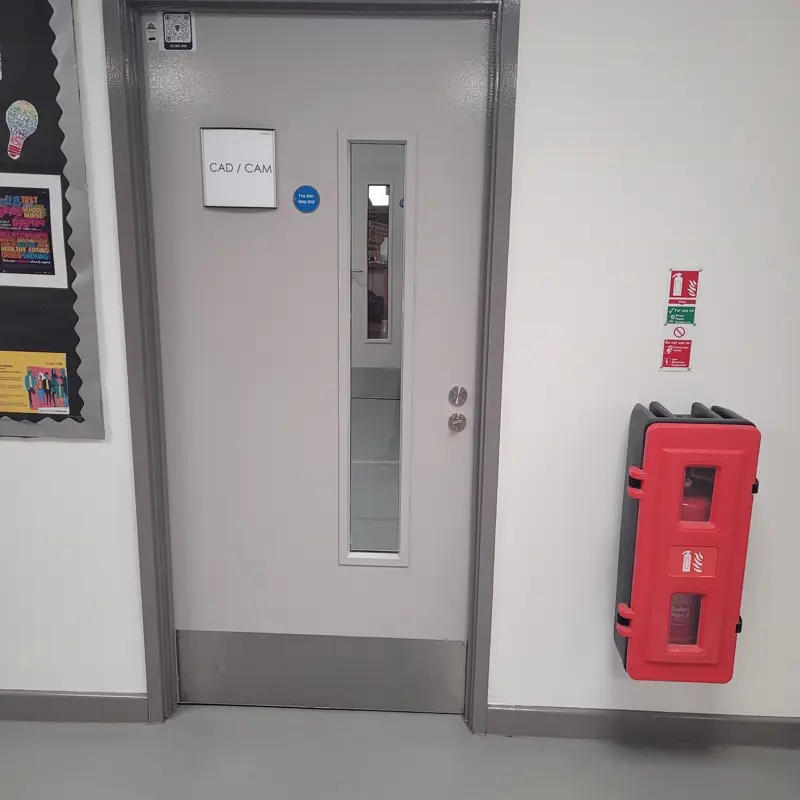
Compartmentation surveys
A compartmentation survey checks whether walls, floors, risers, ceiling voids and service routes still maintain fire separation. The output is a photographed defect schedule that can be priced for fire-stopping remedials.
What affects the price?
Visual survey
Scoped quoteGood for accessible areas and known risk points.
Intrusive survey
Planned quoteNeeded where hidden voids or construction details must be opened up.
Remedial schedule
IncludedDefects are listed for budget and contractor pricing.
Need a compartmentation survey near you? We survey buildings across Luton, Dunstable, Hitchin, St Albans, Hemel Hempstead, Bedford, Stevenage, Watford, Milton Keynes, Barnet, North London and nearby towns.
For urgent quotes, send the report, photos, plans or a short description. We will tell you what can be priced remotely and what needs a site check.
Who is this for?
For responsible persons, accountable persons, building safety managers, principal designers, managing agents, freeholders and main contractors who need to evidence the integrity of compartmentation in their buildings.
- Higher-risk buildings (HRBs) over 18 m or 7 storeys under the Building Safety Act 2022
- Residential blocks, purpose-built flats and HMOs needing Type 4 intrusive fire risk assessments
- Schools, academies and colleges — particularly in roof voids, risers and ceiling voids
- Care homes, hospitals and NHS estates with progressive horizontal evacuation strategies
- Commercial offices, multi-tenant buildings and shopping centres
- Hotels, student accommodation (PBSA) and serviced apartments
- New-build handover surveys and Regulation 38 compliance packs for principal contractors
- Refurbishment, fit-out and post-works compartmentation verification
Common compartmentation failures we identify
- Unsealed service penetrations — cables, pipes, ducts and trays passing through fire-rated walls and floors with no certified firestopping system in place
- Breached compartment lines in roof voids, ceiling voids and risers that allow fire and smoke to bypass the building's fire strategy entirely
- No fire strategy drawings, no firestopping register and no record of who installed what — leaving the responsible person unable to evidence the golden thread under the Building Safety Act
- Recent works — IT cabling, M&E upgrades, partition changes — that have created new penetrations without the original firestopping being reinstated
- Cavity barriers missing or incorrectly fitted in timber-frame, SIPS and modular buildings, allowing concealed fire spread within the structure
- Fire damper failures or missing dampers at duct penetrations through compartment lines
- Risers, lift shafts and stairwells with breaches at floor-by-floor compartment interfaces
What's included in our compartmentation survey
Pre-Survey Document Review
We review your fire strategy, architect's drawings, Regulation 38 information, O&M manuals and any previous compartmentation reports before we attend site, so we arrive with the expected compartment lines marked up.
Type 2 or Type 4 Inspection
Type 2 surveys are non-intrusive inspections of common areas and accessible compartment lines. Type 4 surveys are intrusive — opening ceiling tiles, lifting access panels, inspecting risers and roof voids, and sampling flat or room interiors. We scope to whichever the building's risk profile requires.
Service Penetration Audit
Every penetration through a fire-rated element is logged, measured and assessed against tested third-party systems (FIRAS, IFC, BM TRADA). We identify which are compliant, which need remedial work, and which are missing entirely.
Compartment Line Verification
We trace and verify each compartment wall and floor against the fire strategy — including stairwells, lift shafts, risers, plant rooms and flat entrance lines — and flag any breaches in the line of fire resistance.
Cavity Barrier & Void Inspection
Concealed spaces — ceiling voids, floor voids, raised access floors, roof voids, external cavities — are inspected for cavity barriers and continuity of fire and smoke separation.
Photographic & Location-Referenced Report
Every finding is photographed, given a unique reference number, plotted on a floor plan and risk-rated. The report drops straight into your golden thread of building safety information — not a generic PDF you have to interpret.
Scope of works
Our qualified engineers carry out the following as standard:
Need to evidence compartmentation for your insurer or the Building Safety Regulator? Book a survey today.
Get a Free QuoteOptional services
Certified Remedial Fire Stopping
We carry out the remedial works ourselves using third-party tested and certified systems, with installer certification issued on completion — no need to coordinate a separate contractor.
Firestopping Register & Asset Tagging
We can install a labelling and asset-tag system at every penetration, linked to a digital register, so future maintenance teams know exactly what is installed and how to reinstate it correctly.
Pre-Handover Regulation 38 Survey
For new build and major refurbishment, we survey the building before handover, identify any non-compliances and produce the Regulation 38 fire safety information pack required at completion.
Re-Inspection & Sign-Off
After remedial works are complete — by us or by others — we return to verify, photograph and sign off that the compartmentation has been restored to the original fire strategy.
Fire Door Surveys (BS 8214)
Compartmentation surveys are commonly bundled with fire door surveys as flat entrance and cross-corridor doors form part of the compartment line. We can deliver both in one mobilisation.
Fire Risk Assessment (PAS 79:2020)
Where the compartmentation survey forms part of a wider Type 3 or Type 4 fire risk assessment, we can deliver the full PAS 79:2020 assessment alongside it.
Typical project timeframes
Key benefits
Ongoing support & maintenance
Annual Re-Inspection
We return on an agreed cycle to re-survey high-risk areas — typically risers, plant rooms and recently-accessed voids — and update your firestopping register.
Reactive Reinstatement
When other trades break a compartment line during M&E or fit-out works, we attend, reinstate the firestopping with a tested system and update the register so the golden thread stays intact.
Single Point of Accountability
Survey, remedial works, certification and re-inspection from one company — so there's no gap between the contractor who identified the breach and the contractor who closed it.
Toolbox Talks for Site Teams
We deliver short on-site toolbox talks for principal contractors and FM teams so the people drilling holes understand why and how compartmentation must be reinstated.
How it works
Scoping Call
We talk through the building, the trigger for the survey (insurer, BSR, fire authority, refurb, sale) and confirm whether a Type 2 or Type 4 inspection is appropriate.
Document Review
We review the fire strategy, architect's drawings, Regulation 38 information and any previous compartmentation reports before attending site.
On-Site Survey
Our surveyors carry out the inspection — opening ceiling tiles, accessing risers and voids where authorised, photographing and recording every finding against the floor plan.
Reporting
We compile the executive summary, technical report, photographic register and remedial schedule. Reports are delivered within 10 working days of the final site visit.
Optional Remedials & Sign-Off
Where instructed, we mobilise our installation teams, complete the remedials using certified systems, and re-inspect to confirm compartmentation has been restored.
Type 4 intrusive compartmentation survey across a 6-storey residential block
Residential block — managing agent, North London
Frequently asked questions
Request a Free Quote
One of our qualified engineers will visit your site and we will assess your requirements and come back with a detailed written quotation.
Get a free quote
Pick the service you need, add details and attach a photo if you can. The more information you send, the more accurate the quote.
What happens after you contact us
We review your enquiry
A member of our team reviews your requirements and gets back to you within 24 hours.
We arrange a site survey
We schedule a convenient time to visit your site and assess your needs in person.
We prepare a quotation
You receive a clear, detailed quote with no hidden costs or obligations.
We schedule the work
Once approved, we agree a start date that works around your operations.
We provide documentation & support
On completion, you receive all certificates, reports, and ongoing support details.
Trusted by schools, care homes, warehouses, and construction sites
We work with commercial and public sector clients across Bedfordshire, Hertfordshire, Buckinghamshire, and London.
Schools & Academies
Primary schools, secondary schools, multi-academy trusts, and nurseries
Construction Sites
Active building sites, developments, and temporary site compounds
Warehouses & Industrial
Warehouses, distribution centres, factories, and industrial units
Care Homes & Healthcare
Care homes, nursing facilities, clinics, and GP surgeries
Car Garages & Workshops
MOT centres, car dealerships, vehicle workshops, and body shops
Commercial Offices
Offices, business parks, co-working spaces, and corporate HQs
Public Sector
Local authority buildings, NHS facilities, and community centres
Retail & Hospitality
Shops, restaurants, pubs, hotels, and leisure venues
Related services
Guides & advice from our engineers
Book a compartmentation survey
Evidence the integrity of your compartmentation, build out your golden thread of building safety information, and get a priced remedial schedule ready to issue. Contact us for a scoping call and a fixed-price proposal.
Request a free quote
Free no-obligation quote · Professional engineers · Response within 24 hours